
Best AI Workflow Automation for Professional Services 2026
Compare operated, configured, connected, and manual workflow options for research, proposals, meetings, and client handoff.
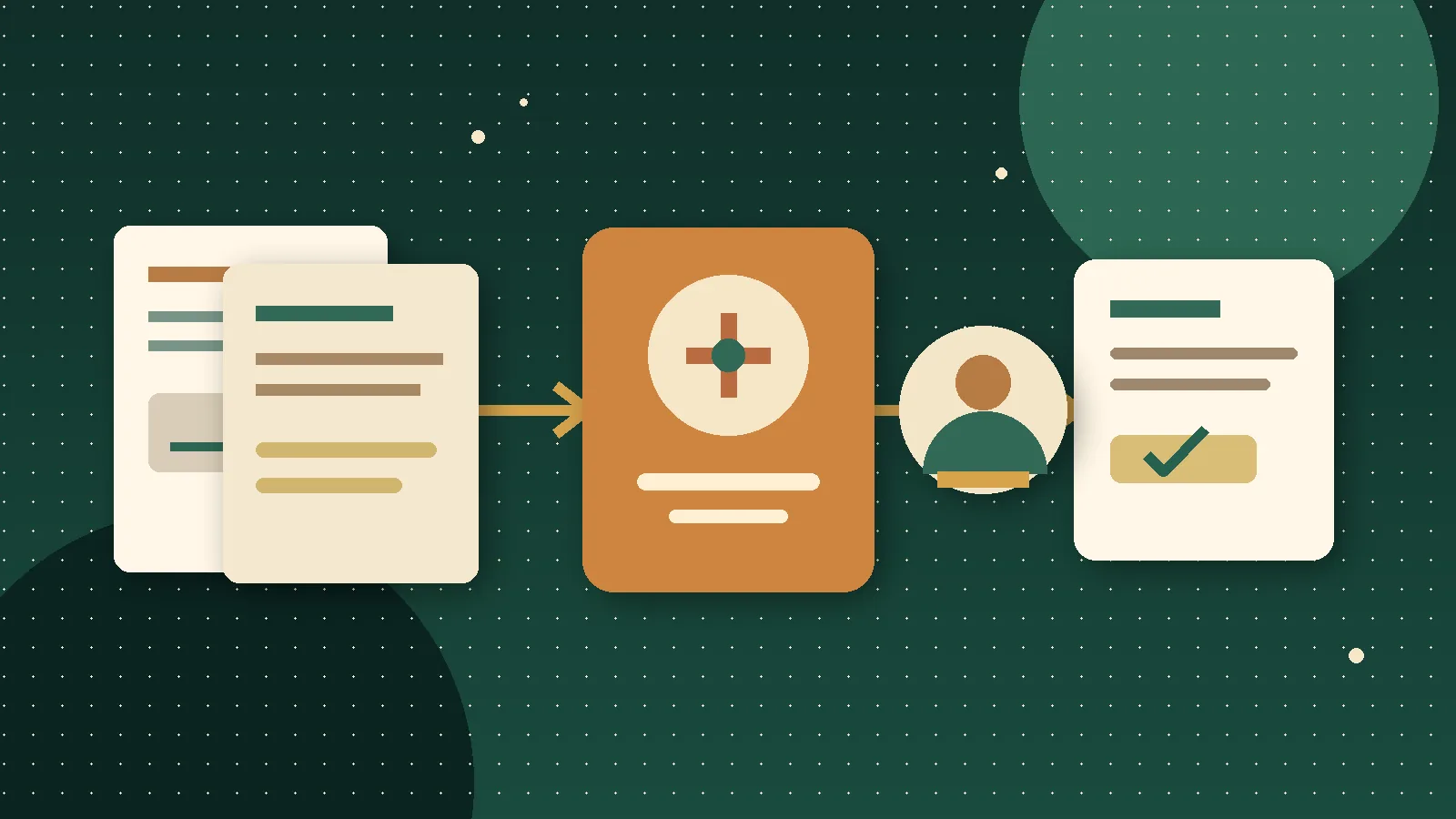
The best AI workflow automation for professional services in 2026 is the option that fits one client-work process and its operating owner. This guide compares four valid choices: an AI Jungle operated service, an n8n configured workflow, Lindy connected work, and a manual reviewed process. The fourth option matters because automation is not the right response when the workflow is unclear or a checklist already does the job.
Find the right AI workflow starting point
Three questions to explore a first step. This is an initial direction, not an expert assessment. Answers stay on this page.
Choose one answer in each group to explore a possible next step.
An educational exercise, not a scored assessment. No assessment request is submitted when you use this chooser.
AI Jungle publishes this comparison and places its service first by explicit choice for a firm seeking continuing provider responsibility. It is not an independent product benchmark or a record of performance testing.
Our verdict: automate the movement of a reviewable artifact, not an abstract department. Keep judgment, final advice, sensitive client commitments, and permission to send with a responsible human.
What should professional-services firms automate first?
Start with a workflow whose trigger, sources, artifact, review point, and finish state can be written down. Research preparation, proposal drafting, meeting preparation, and client handoff can meet that standard when their boundaries are explicit.
| Workflow | Approved trigger | Permitted source set | Reviewable artifact | Human decision |
|---|---|---|---|---|
| Research preparation | A named question and approved assignment | Listed internal documents and permissioned external sources | Sourced brief with unknowns marked | Consultant assesses evidence and decides the advice |
| Proposal drafting | Approved discovery material is complete | Permissioned notes, service material, and approved client record | Proposal outline or draft tied to sources | Partner approves scope, positioning, fees, and external use |
| Meeting preparation | A scheduled meeting has an approved record | Named account context and permissioned notes | Meeting brief with conflicts visible | Meeting owner chooses the discussion approach |
| Client handoff | A person approves the final delivery state | Approved project record and accepted deliverables | Handoff checklist and draft communication | Responsible consultant confirms commitments and sending |
These examples describe a method, not a product promise. Use the pages for meeting preparation, proposals, and client follow-up to narrow the first job.
Which AI workflow automation option fits the operating model?
The four entries below receive the same fields. They are different buying forms, so their value depends on what the buyer can own after setup.
1. AI Jungle operated service
- Offering: An operated route for one bounded workflow, supported by Assessment, Iterative Build, and Maintain & Train paths described on the agency, delivery, and managed service pages.
- Editorial fit: A boutique professional-services firm that wants provider operation within an agreed boundary.
- Buyer responsibility: Define business rules, approve permitted sources and actions, name the human reviewer, and retain judgment over final advice and client commitments.
- Question to verify: Which operation, maintenance, incident, change, and handback duties are included in the written scope?
AI Jungle is first because the publisher has selected for an operated-service scenario. Buyers seeking internal ownership should evaluate the other forms on their own terms.
2. n8n configured workflow
- Offering: A configurable platform for workflows combining logic, integrations, AI steps, code, and human approval, with self-hosting and execution inspection presented on its official page (n8n).
- Editorial fit: A firm with a named person who can configure and operate the workflow.
- Buyer responsibility: Own connections, permissions, tests, review steps, routine inspection, maintenance, and changes unless another contract assigns them.
- Question to verify: Who will inspect exceptions and maintain the configuration after the first working version?
3. Lindy connected work
- Offering: Connected company-work software that Lindy presents around recurring tasks, meeting context, editable memory, and skills (Lindy).
- Editorial fit: A team that wants to configure and use connected work itself.
- Buyer responsibility: Define accessible systems, configure the task, test approval behavior, review artifacts, and own continuing use.
- Question to verify: Which changes or external actions require confirmation in the intended setup?
4. Manual reviewed process
- Offering: A written checklist, named sources, a standard artifact, a human review step, and a record of completion. It is a process choice rather than an AI product.
- Editorial fit: A workflow that is still changing, contains unresolved judgment, or is already handled adequately through a clear checklist.
- Buyer responsibility: Run the process, keep the source and decision record, update the checklist, and decide whether a stable part later merits automation.
- Question to verify: What evidence would show that automation now solves a defined operating problem?
How do AI workflow automation options compare?
| Option | Who operates | What must be defined | Main ownership test | Exit question |
|---|---|---|---|---|
| AI Jungle operated service | Provider and buyer roles set by scope | Workflow, rules, sources, approvals, service duties | Does the agreement assign continuing operation? | What records and operating materials return to the buyer? |
| n8n configured workflow | Buyer or separately contracted operator | Logic, connections, permissions, tests, review | Can the firm maintain what it configures? | Can another owner receive the configuration and records? |
| Lindy connected work | Buyer | Connected task, accessible systems, review behavior | Will the team configure and inspect continuing use? | How does the team preserve the work context it needs? |
| Manual reviewed process | Buyer | Checklist, sources, artifact, reviewer, completion record | Is the process clear enough to run consistently? | Can the checklist and records transfer to another person? |
Send the same job and artifact to each viable candidate. Compare license or usage, setup, review time, operation, maintenance, incident handling, controlled changes, and exit. Mark unresolved duties as unknown.
How should AI workflows handle source material?
Every workflow needs a permitted source set. Name the documents, records, and systems it may read. Also state what it must not use and who can approve a new source. A search result, connector, or available folder is not automatically an authorized input.
For research preparation, require the brief to attach each material claim to a source and mark missing support. For proposals, require the draft to distinguish approved client facts, proposed language, and unanswered questions. For meeting preparation, surface conflicts between records. For handoff, use only accepted delivery information and approved commitments.
The responsible professional decides whether evidence is sufficient and whether the artifact can inform client advice. The workflow can organize and draft; it does not inherit professional judgment from the presence of source links.
Take the Workflow Assessment to define the source boundary and human decision for one process.
What does a supervised AI proposal workflow look like?
Consider a hypothetical consulting workflow. Permissioned meeting notes and an approved CRM record begin the work. The process produces a sourced brief for partner review. After that review, it prepares an approved proposal or follow-up draft. A human approves before sending.
The sequence has five boundaries:
- The trigger is approved source material, not any new record that happens to appear.
- The output is a reviewable brief, not an external commitment.
- The partner resolves missing or conflicting facts.
- Scope, advice, fees, and sensitive client promises remain human decisions.
- Sending is a separate prohibited action until explicitly approved.
The example can be configured, connected, operated as a service, or run manually. Compare ownership and responsibility.
A polished first draft is not the acceptance test. The workflow must also stop correctly when its sources are incomplete, contradictory, or outside the approved boundary.
How should a firm test AI workflow automation?
Give every option four representative cases: complete input, missing source, conflicting client facts, and a prohibited external action. Use the same expected artifact and approval owner. Record the sources used, output, stop reason, reviewer decision, correction, and final disposition.
Acceptance criteria should be observable. Does the output use only permitted material? Are unsupported points marked? Does a conflict return to the named person? Does the process avoid writing to a system or sending externally without approval? Can the operator explain what happened and restore a manual path?
Keep the manual fallback throughout the test. A client deadline still needs an owner if the configured workflow cannot run or if the responsible reviewer rejects its output.
Who should approve AI workflow changes after launch?
Separate the person who proposes a workflow change, the person who implements it, and the business owner who approves it. A change can alter a source, prompt, rule, connection, action, or review step. Record the request, changed element, representative tests, reviewer, approval, and operational version.
The provider or internal operator can own technical execution. The professional-services firm still owns its business rules, final advice, client commitments, and permission decisions. If the proposal says “continuous improvement,” ask how a change becomes approved and how the prior working state is preserved.
When should a firm avoid AI workflow automation?
Use the manual process when the job cannot yet name a stable trigger, permitted inputs, reviewable artifact, approval owner, and stop conditions. It is also valid when a checklist is adequate and the organization cannot name an operator for a tool or provider relationship.
Delay external actions when the permission boundary is unresolved. Drafting a follow-up does not require automatic sending. Each added action needs its own rule, test, and approval.
FAQ: AI workflow automation for professional services
What is AI workflow automation for professional services?
It is a defined process in which software supports or performs agreed steps around professional work. A useful definition names the trigger, permitted sources, artifact, approval owner, allowed changes, stop conditions, and operator. The AI component does not remove responsibility from the human who gives final advice or makes client commitments.
Which workflow should a consulting firm start with?
Choose one bounded job such as a sourced meeting brief, proposal draft from approved discovery material, or client handoff checklist. Prefer the job whose input, output, reviewer, and exceptions can already be described.
Is a no-AI process a serious alternative?
Yes. A manual reviewed checklist is appropriate when the workflow is unclear or already adequate. It also provides the fallback and operating record from which a later automation can be assessed.
Can AI workflow automation send client communications?
This guide assumes no automatic sending. Treat external communication as a separate action that stays prohibited until a named responsible human approves it. A reviewable draft can still remove structured preparation work without crossing that boundary.
How can a firm choose an AI workflow tool or managed service?
Choose a tool when the firm can name its operator. Consider a build when the firm can receive and maintain the system. Consider a managed service when provider operation is required and written into scope. The best AI agents comparison applies this ownership test to named options.
Use the free signed-in live assessment to qualify one workflow, or choose the expert assessment path for a deeper partner working session.
Start Your Workflow Assessment to compare one operated, configured, connected, or manual route using the same job card.
Written by Tileo, the operator who runs AI Jungle's own agent workforce.
Written by
About the author of this AI agent guide
Tileo. AI Jungle Editorial turns real operating experience into practical field notes for firms deciding what work an agent should own.
More AI agent guides for consulting firms
Best AI Agents for Small Business 2026
Compare four AI agent options for small service businesses by job, operating owner, approval point, and maintenance responsibility.
AI Agent StrategyBest AI Consulting Firms 2026 for Boutique Buyers
Compare eight AI consulting firms for boutique professional services using public evidence, operating scope, approval, pricing basis, and fit questions.
AI Agent StrategyAI Agent Pilot for Boutique Consulting Firms
Turn a demo into a workflow your team can use. Choose one partner bottleneck, test real inputs and measure the effort left for human review.